between here and there


Leave a comment

the gold season


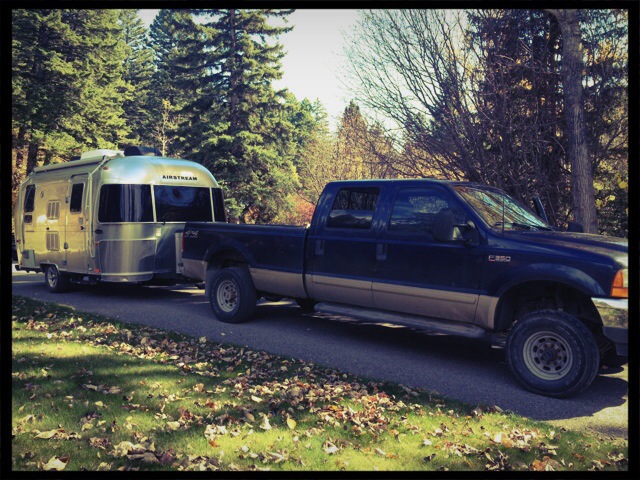
bambi preparing for the last drive of 2014

bambi preparing for the last drive of 2014

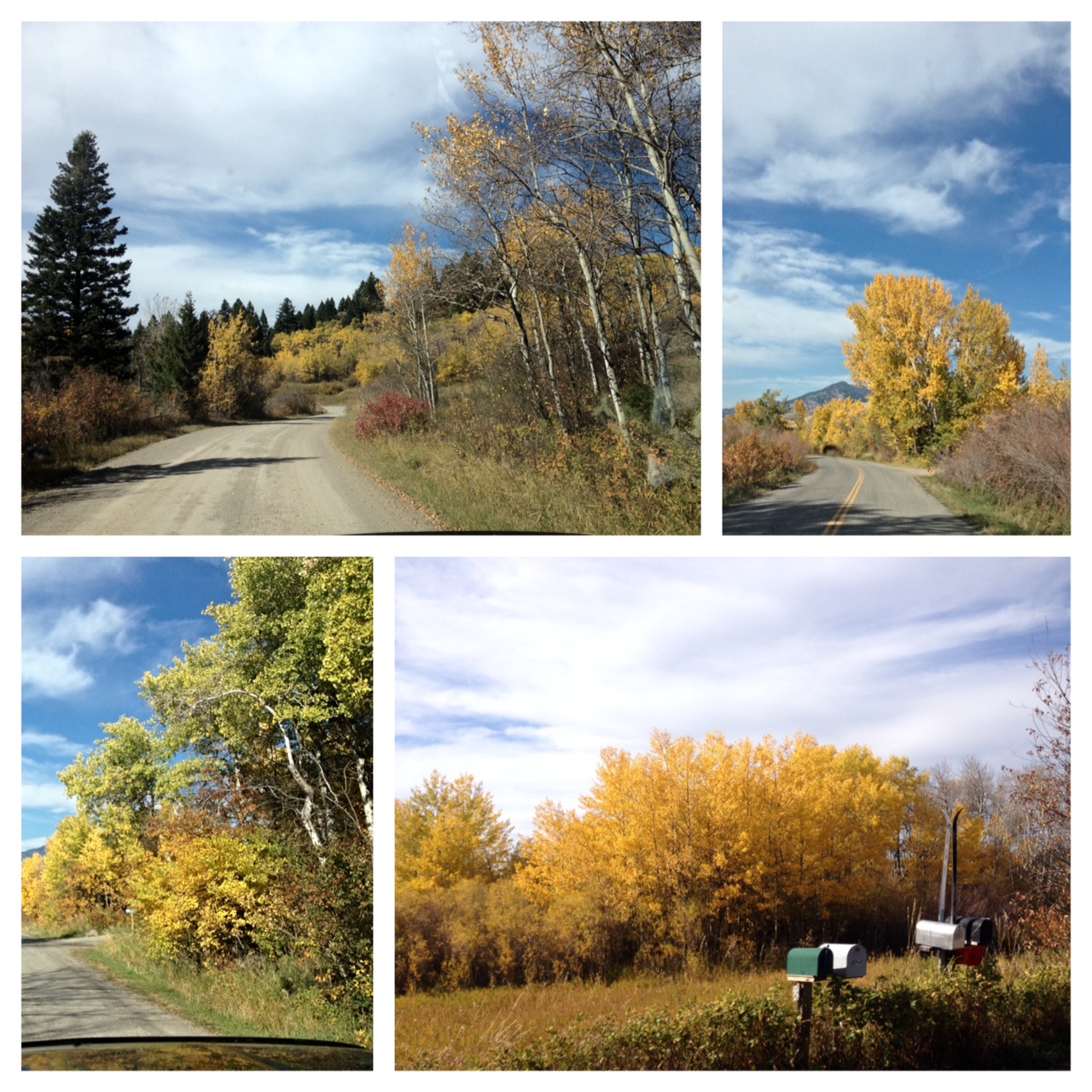
the fall days are here. As a matter of fact, they are glorious days in October that are warm and sunny. Anyone a local, knows these days are limited. They will come again, but not before a long stretch of cold, white winter. For me, the coming cold also means shutting down my bambi airstream. Its a sad day that suggests I won’t be rolling down the highway with camper in tow any time soon. But there is always that dream that some free time will show up along with clean roads. And I will hook up the rig and head out….dreaming is important.  Dreaming is where magic is born.

So, until the next time, I will dream of the next trips, and love the day I have today. Golden leaves blowing from branches across the yard and a dog that really, really wants to go out and hike.

picstitch


Leave a comment

Monday, Monday

20141006-081942.jpg

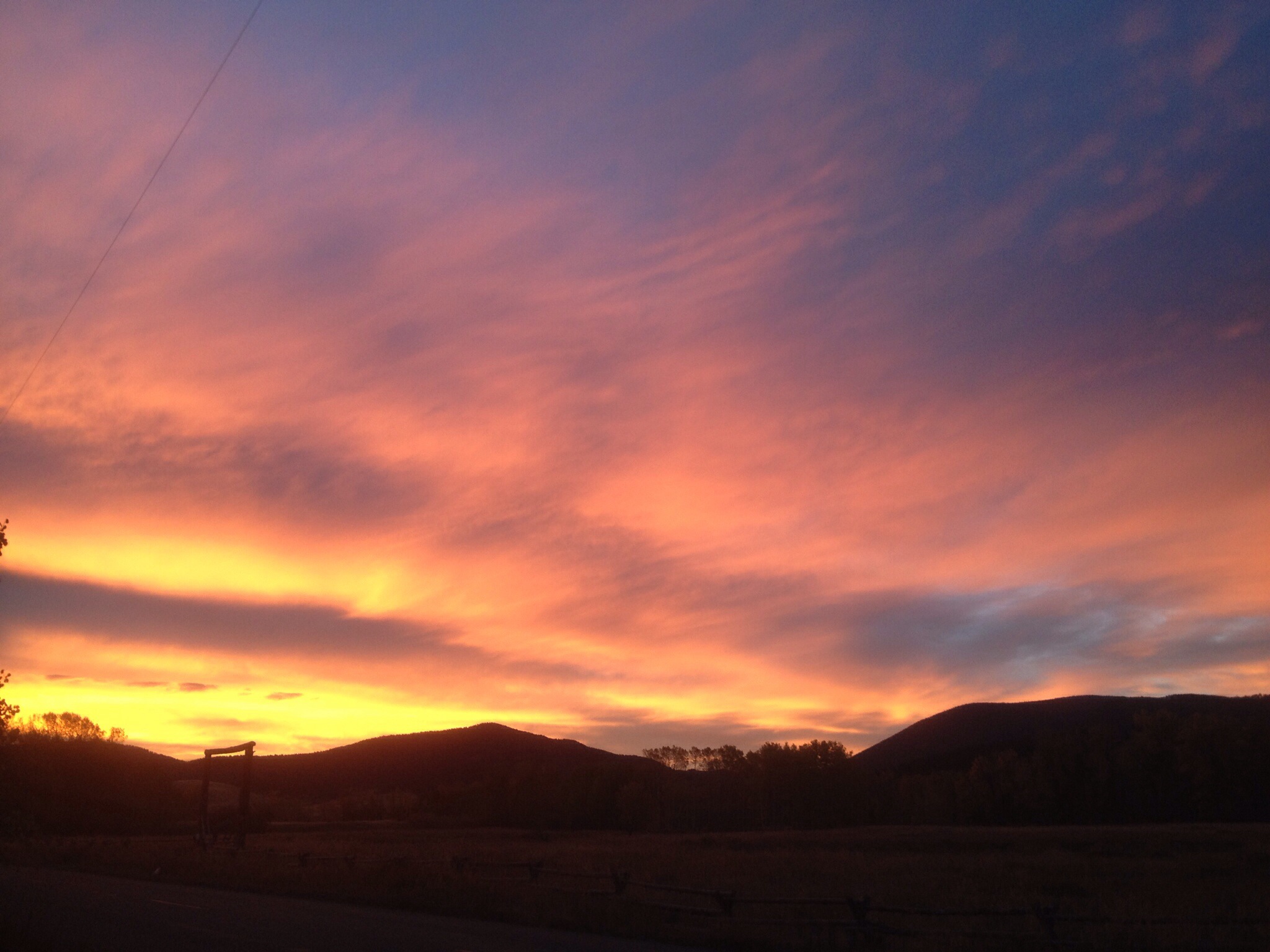
We had a blissful sunrise this morning. A great promise for a beautiful day!


Leave a comment

on the way to being


a little Donald Judd for the morning

a little Donald Judd for the morning

When we are children we wonder who we will become, when we are adults we wonder who have become.
Between Becoming and being…we are all apart of the extensive continuum.
We are constantly becoming ourselves. And Simply being along the way.


Leave a comment

Whole Food

20140926-055941.jpg

I’ve been thinking a lot about Farms and farmers these past few months . Not because I saw a documentary, which seems to spur on most contemplative American moments these days. But because I am thinking about people, Land, place, food, population , hunger, the need for healthy food, and plants that are genetically modified . From these I come to consider farms, where is our food grown, and by whom. I think about farmers. I think about food, how intimate food is just by the fact that we take it into our bodies, that the food we eat results in our physicality, our state of mind, our overall energy , our potential for creativity and expression.

What I am troubled by is that instead of recognizing the intimate connection we have with food, we consume it with the same disconnected attitude we have for most things we come in contact with. We disregard food, it’s origin, it’s value , it’s necessity and it’s ability to connect us to the world around us; mind, body, and spirit. When we disregard the origination of our food , where it comes from and who has grown it for us, we disregard a primary and critical link between humanity and planet, between people and place. We give away our rights and responsibility to be a participant on Earth.

What makes me hopeful these days is the recent increase in discourse about food and farmers. Who grows what where, why particular foods are grown, and the value of what is grown relative to the place and the community. There is a connection being made between farmers, the food they grow for us , how they grow it ( organically or other) , and how their choices fit – or don’t fit the land it is grown from. There is a beginning of a recognition of how food is grown by these committed farmers, not abstractly as a commodity for an uncommitted population, but instead for a committed people.

This connection between farmers, food and us extends beyond the delectable recipes photographed in Food and Wine or Gourmande magazine that encourage us to become weekend warrior chefs, but to instead join the day to day living that makes us whole, and part of the planet.

Engage in intimacy, enrich your soul and feed your body, meet the farmer who grows your food, thank them for committing their lives to your health, to caring for the planet, and considering what comes next.


2 Comments

The Empire Revisited

20140919-124911.jpg

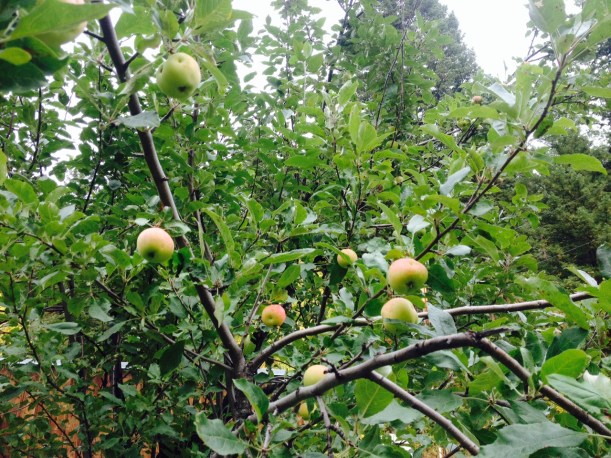
In my last post I talked about the looming threat of wild visitors to my Apple Tree. Yesterday I took a hike up the local trail and upon my return the tree had been visited. All the apples were stripped from the bottom branches ! Ha! Time to harvest. So, here is my share of the apples. I left some on for any wayward visitors who really need an afternoon snack.

By the way, I’m still hoping someone will send me their favorite recipe for an Apple Crisp!


Leave a comment

The Empire

The Empire Apple, small as a plum

The Empire Apple, small as a plum


Apple season has arrived in my yard. Almost overnight the leaves on the Amur and Cottonwood are turning bright yellow. And I am not exaggerating about the “overnight” aspect. Come and see for yourself if you want. In addition to the bright light of leaves glowing in my yard I think the apples on my single apple tree are ready to pick. And as I noted in a previous blog, that means I need to pick them before the Moose or Bear get them.

One came off the tree the other day, and I decided to give it a try. They are smallish. Like a plum. They are mostly yellow with a beautiful overlay of reddish streaks. But I don’t know which variety they are. Looking on line it seems like it may be an Empire.

Here is what they say about the Empire Apple:

Empire
Introduced in New York, 1966 (McIntosh x Delicious).
Ripens in late September, (two weeks later than McIntosh).
Fruit is medium; skin is red-on-yellow to all red. Flesh is crisp, juicy, aromatic and slightly tart.
Sweet, spicy quality excellent for eating fresh, in salads and fruit cups

The Apple Tree in my yard

Take a look at the pics and let me know what you think. Am I right? Or is it another variety?

What I know, is that the one I tasted is sweet. very fragrant, and slightly soft. Delicious, and wonderful considering I got to watch it grow from sweet pink blossom to edible fruit!

I think I need to pick some a make an Apple Crisp. Anybody have suggestions for a recipe?


just before eating


Leave a comment

on the road to Fall

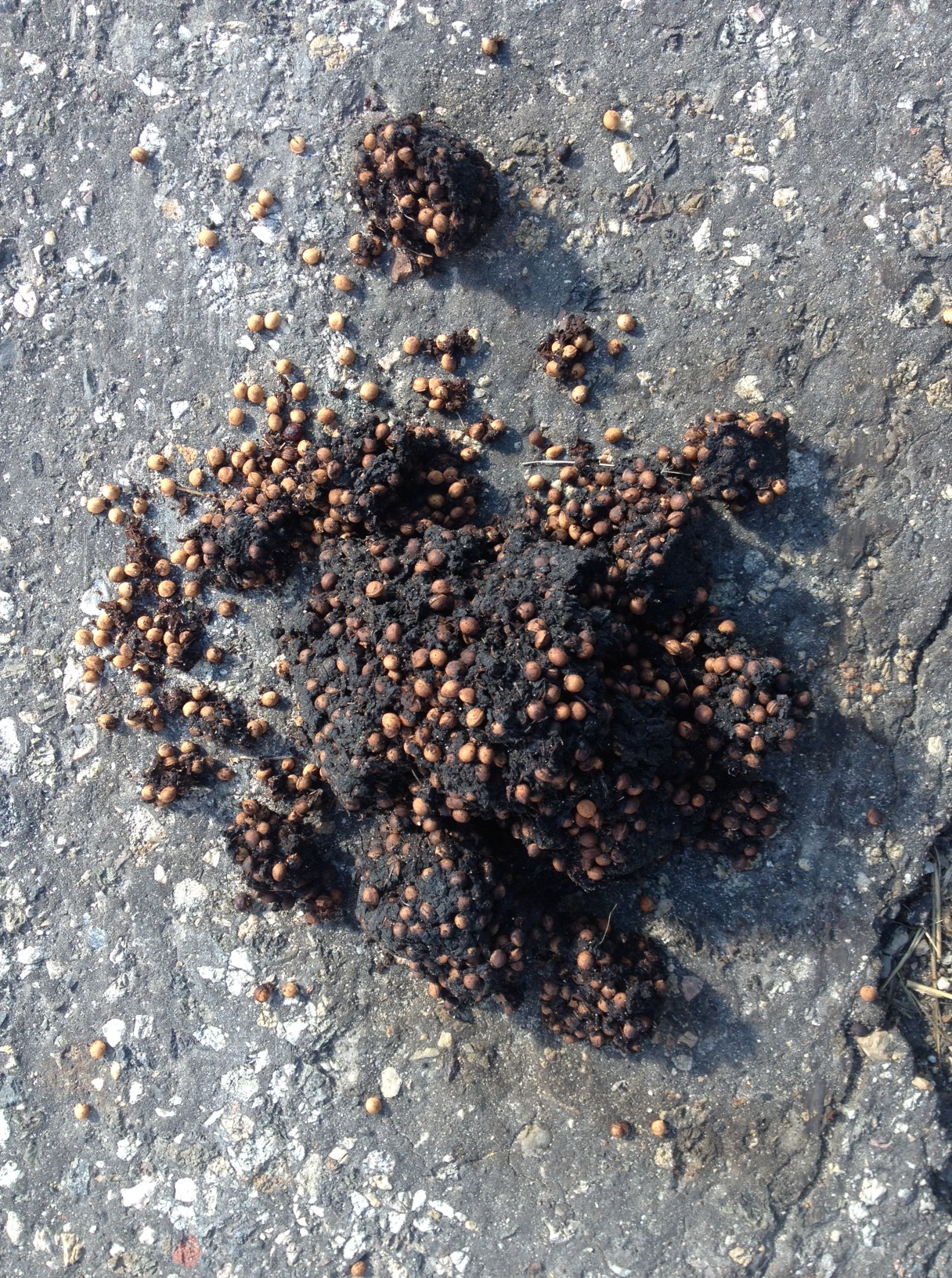
Bear scat along the road home

Bear scat along the road home

the great chokecherry attractant

the great chokecherry attractant


The days are becoming more brisk, more fall-like. As the summer pushes towards its last moments the rush of ripe fruit arrives. Sweet smelling and practically dripping from its bush. With the fruit comes the bears. Bears move by season and available food source. So while I am always cautious of bears in the wilderness around me, the places that I hike and camp, I also realize that most bears are in particular landscapes and elevations at certain times of the year. If I pay attention to their needs I am most likely not in their way. Of course there is the “hibernation” period, those long restful periods of winter, when it is unlikely to see them. Those short days of light, and long days of dark when I wish I could crawl into a cave as the snow falls, just as the bears do. But in rest of the year they are moving around looking for the best food source: logs and bugs, left over carnage that is left from a creature not surviving the winter, or losing a battle with another animal, nuts, and the sweetest of all, berries. When the fruit comes into season we have the greatest opportunity to cross paths with a bear or two.

For me, living up a canyon outside of Bozeman surrounded by protected Forest land, such an experience is even greater. The two trails that leave into the mountains from the end of my road provide great cross over with bears and their berries. And when I know it is best to start paying attention to where and when I am hiking on these trails is when I see the large piles of bear poop that start showing up on the road to my house. Which is now. The chokecherry and other berries are ripe along the road and every morning there are more piles left from the bears after they gorge on the berries. The branches of bushes are pulled down and leaning toward from the roadside where the bears are tugging on them. And as they move up the road they are moving up in elevation, which means that they are naturally following the berries as they ripen over the next few weeks.

The last stop before they head up the trails is a treat in my yard. An Apple tree which is heavy with fruits this year. Planted just outside my front door I observe the fruit every time I walk by. This week it is turning from green to shades of red. Small little sweet fruits that will soon be eaten by me, moose and bear. The question is, who will get the most of the fruit.


Leave a comment

Living Like Weasels

20140829-160412.jpg

I’m on the plane headed from Montana to North Carolina to visit life-long friends. Friends whose children have transformed in the past few years into different versions of the creatures they were the last time I visited.

I’m thinking about the visit, great conversation, good, local food, and a few long walks. And as I think about their home I can’t help but land in the middle of my own imaginary “Annie Dillard” land. While it has been many years since Dillard wrote

“Pilgrim at Tinker Creek,” when I visit my friends I always feel like I am returning to the land and experiences she wrote of many years ago. Beyond Tinker Creek ruminations I realize I mostly transport to the landscape she describes in her short story “Living Like Weasels”, deciduous woods filled with scurrying sounds, that remains a strong touchstone for me even twenty-odd years after reading it the first time. Such a profound reference point for life this story has given me, that I read it every year with my students. A discussion of freedom, choice, intuition, love, living , and instinct pursues. Each discussion , every year, different, but similar in nuance.

Tomorrow I will head into the woods, both real and imagined, for that soulful journey that marries reality with imagination. I will bow to the six directions, as Jim
Harrison notes. I will live for a bit with the weasel and look for the wild rose bush , if I am lucky I will lose myself for a while, lose destination, hear the sounds of the wild woods beyond the motors of cars that hum past the perimeter. I will think about what I should be holding onto, and what is unnecessary. I will smell the woods, look up into the sky for that Eagle she writes of and deliver myself to the World, mindless for as long as I can muster, searching for my necessity in life .


Leave a comment

Manufactured Landscapes

photo
I’ve lived in Montana since 1998. When I arrived there was still a realness, a grittiness to the place, that, as I look around today, seems to be slipping quietly away. What is disappearing is that sense of a community when folks have slowly built up their surroundings responding organically to the place in which they live. The growth over time that occurs as people scrape together their savings to open a mercantile, or a bakery, or build their home. These are individuals who become a collective, who put down roots, people who truly commit and live in the place of their business. The collective of place that I am missing today evolves beyond the hands of trained designers who have learned to execute an industrialized model for living. What I see today are the designed landscapes that have vegetation spaced correctly, trees and shrubs (not bushes) growing from a  pattern of circles specified while looking down at a two-dimensional drawing instead of making decisions while standing on the ground, designers who have the landscape smoothed and weeded, and de-wrinkled the nature of the place.

I know, you’re saying to yourself , she’s just romanticizing the past. But I don’t believe that’s what is happening. Instead, I am witnessing my hometown of Bozeman transform into the sameness of the industrialized American development model. These are the manufactured landscapes that support the commercial and economic successes of Costco, Home Depot, Lowes, World Market, The Gap, and Starbucks (yes we finally have them here, too). These are the places that now look the same across the United States. The trees and shrubs that decorate and edge these big box stores ring them like imitation stones of cheap jewelry. The curb cuts and edging and bark islands, the four layers of vegetation from Trees, to shrub, to some ambiguous flowering plant selected for its long blooms and easy maintenance growing up against bermuda grass or its equal, these living things are used to make a new place that we know, but not really. The easily recognizable non-place.  A place that is everywhere but nowhere. A place that makes us feel comfortable so that we easily slip into the ridiculously large parking lots of suburban America without question so that we can happily pop into the big box store of choice. And as we drive in we think, isn’t this pretty, with the greenness of the world around us. When actually, we are just holding nature hostage for our own use, our own manufactured excuse of a natural landscape.

Who is to blame for all of this? We are. We all are, every time we forget where we are as we slip into that lull of commercialism that makes us feel better, or even good about shopping for things we don’t necessarily need. We, the designers, are responsible because we have passively accepted the instruction of “how to design” the edges of these places, that we have followed city planners who have created such sweet little places for their community to come and go from. We are responsible because we are not getting out into the wild enough to recognize the difference, or care about the difference of what this lack of understanding does to us or our impact on the world. We are, because we fail to recognize that we continue to use the natural world in ways that discourage and erase our sense of being a part of a larger whole, instead encouraging even the simplest use of the living world in dishonorable ways.


If we do care, how do we find that integrity of place, how do we retain it? How do we respect these places in their specificity and richness of conditions while knitting together our sense of belonging to these places, too? How do we honor where we live, and how do we create them?

Perhaps we start by not fully and completely erasing the world that appears scrubby and unresolved, the place that is living, cyclical, jagged, and constantly changing. The place that was here before we moved in, before we used that can of upside down marking paint and staked the land. We can start by standing, feet on the ground as Ed Abbey said, and feeling and observing and learning the world around us. By not accepting the lessons that we are taught at school without question, the lessons that are same all over, lessons of ubiquity for providing generalized backdrops where we live. By valuing the need to take time, to live local. To live the local, not the commercial, to live the place, not the sameness that is expanding across the United States.

I think you know what I’m talking about. If not take a look around. If your hometown looks like the one down the road you are living in a Manufactured Landscape. If not, then there is still time to give deep consideration, time and commitment to where you live, to not erase the community that already lives there, all of it,  plants and animals alike.
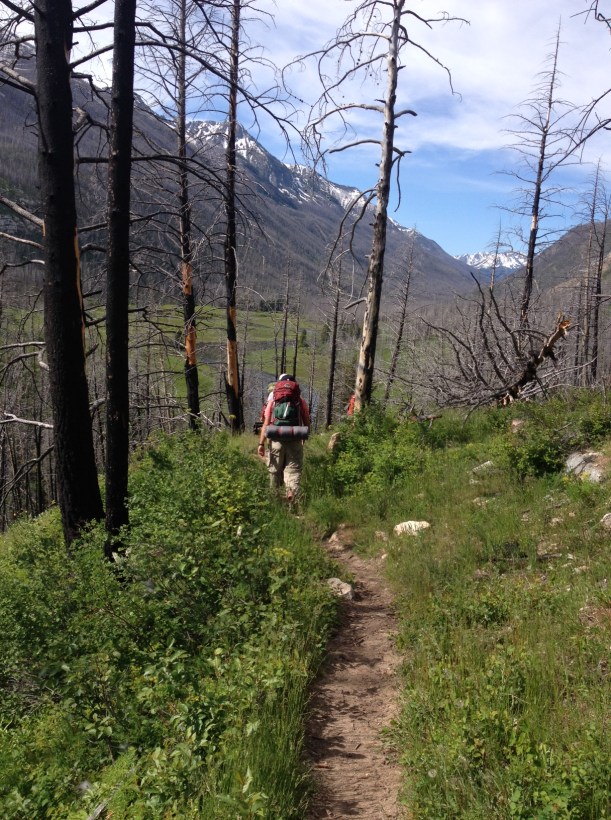
The Wilderness that surrounds us
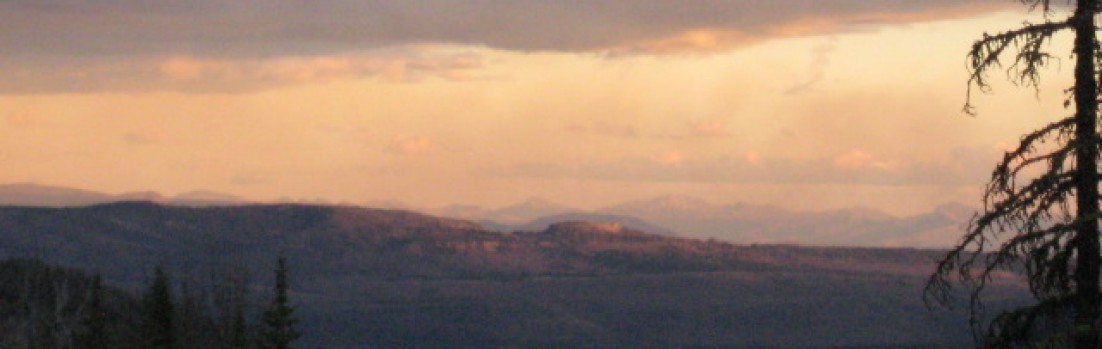
The Wilderness that surrounds us