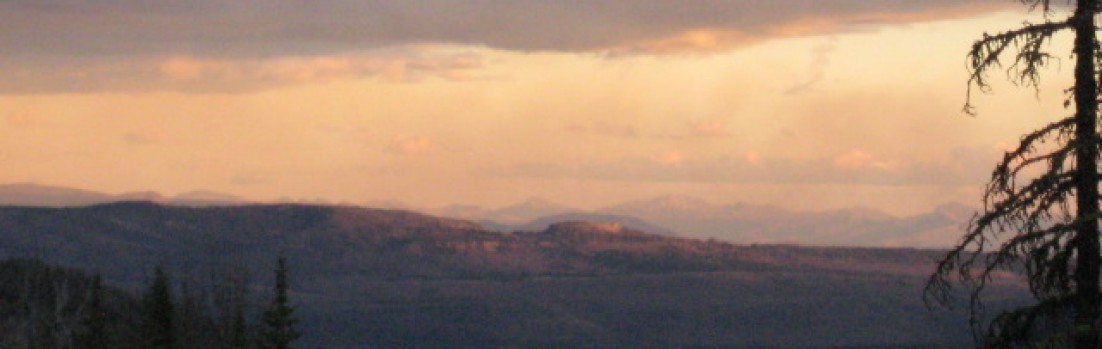
between here and there


Leave a comment

Nature and the Metropolis

20130618-214754.jpg

how do we find nature in a world that is overly built? And how do we convince those living in urban environments that the magic of nature is there among the streets and buildings and cars? That we have a choice to see or not to see.

We all make choices. to live fully immersed, or live a life half-way between what is built, what we build against and that which is unbuilt, that survives beyond us. We make choices to allow electronics to encircle our lives, to structure our days, and then we want to blame something that has no “legs” that it rules our lives.

Some of us just can’t cut it. Cannot take the relentlessness of humanity, its pain and joy. We cannot find the place, space, or time to recharge. To wake up happy the next day after some tumultuous previous day. Looking for some archaic purity that never really existed anyway. Because certainly in the “real” wilderness we would be hunted while hunting. Nature made calm, nature removed of its power and original struggles is nature controlled. These are degrees of the world held within our control, just a version of agrarian reality. The inability to soak into the fullness of humanity leads us to believe that we must choose its opposite, even though it might not exist anymore….

Learning to live with the wild wolf and the grizzly in spite of fear is easier for some of us than the trauma that arrives from the constancy of an overpopulated and densified piece of land we call a metropolis. But are we really learning to live with the wild creatures that are left on the planet? Or are we simply living beside them as we do in a city when we learn to tolerate the neighbors and their peculiar social activities that we cannot relate to? These are the annoyances of living.

The real issue is where do we come face-to-face with transcendence? Where do we feel at home most in a world that is difficult and risky to navigate? Where does our truth lie? Do the woods, stream, mountain and desert allow us to ignore the aspects of the world that we cannot fully come to terms with in the same way that thousands of people surrounding us on an urban street corner requires our attention more than any speck of nature that may be present at the same time and place.

believing that the urban condition reduces the presence of the natural world allows us to ignore the real work that must be taken on to retain a creative mind. Blaming the fact that we live in a dense human environment is no excuse to not daydream, to watch the moon rise or the sunset. To smell the rain on pavement. To see the green of plants growing between those things we build and then ignore.

I chose this more loosely defined, blurred environment between the built and the unbuilt, between the rural and the wild, between dogs running lose on the streets and grizzly bear swaggering down trails and mountainsides because it makes the most sense to me. This reality is the one that feels the most accurate to me, churns my mind and stirs my creativity. this place is where my god lives, where I transcend myself to something that extends beyond me. In this choice I gave up the day to day stimulation of a collective human nature, a creativity that feeds upon itself. I gave up the experience of the constantly spinning greatest cultural expressions. And I am willing to go without this, while recognizing what I lose and what I gain. This giving up is not to say that a certain great culture does not exist where I live. Great culture abounds, but it is not the culture that grows from the human intensity of a metropolis, not the culture that spins at such a high rate that change happens in the single spin of the earth.

But what I find difficult to accept is those who live in these places of great human density, where the built rivals the unbuilt, who claim that there is no inspiration where they live that comes from nature. That there is no ability to capture transcendence in their lives, in the things they make, in the raising of their children. We must all seek out the truth of the places where we live. This is our responsibility. If we do not easily find the truth then we must seek it out. Truth is us in nature, however large or small. Truth is the rain we run from on a winter day, it is the line of grass that arrives between the cracks in the concrete, it is the sun that rises on one side of the city and sets on the other, with all of the colors that come with it. Truth is the reflection of sun on our buildings. Truth, if we recognize it, is transcendence, the vastness of the world and our smallness in it.
Leave a comment

Exploring the Tetons

20130613-172932.jpg

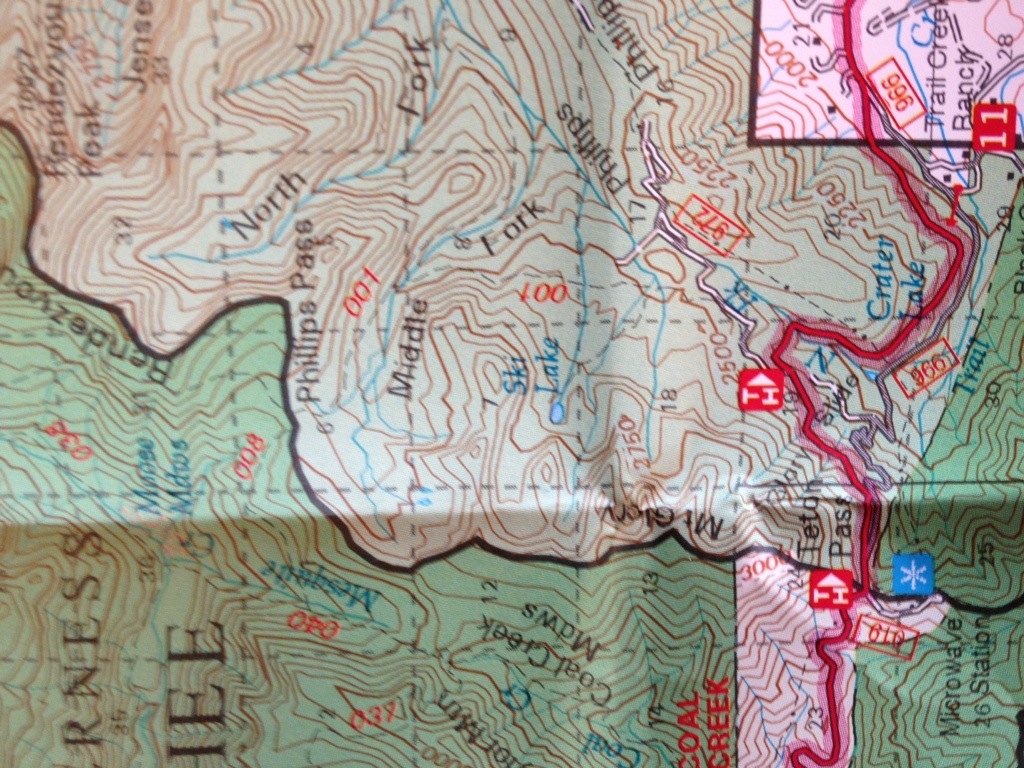
I’ve always wondered what a real backcountry emergency would be like, and now I know. Summer Remote Studio had its first overnight backcountry trip in the Tetons this week. We followed a common route for us, up Philips Pass Trail. We ate lunch and proceeded to follow the trail through the Jedediah Wilderness and down another drainage into Idaho. Within minutes we were no longer on earth but hiking through snow. The snow grew deeper and we spent the next couple of hours searching for the trail that came and went like a true hide-and-seek game. The snow was knee to thigh deep. Downed trees made movement slow. But everyone remained in good spirits. We found our way old-school with compass, topo quad map and landmarks. We made it into the Mesquite drainage to spend the night.

I was exhausted. My pack was heavy. Not too many summer daylight hours before I was asleep in my tent. At 1 am I was woke by one of the students who told me his tent mate was not feeling well. It was at this point I wondered in the Wilderness First Aid training would pay off. I went through his symptoms. His current overall condition. He was not in Shock, but he was in severe pain. Too much to walk out. I thought about hiking out with headlamp down a trail i had never hiked….He calmed down about within the hour and we made it through the night.

The pain returned in the morning and I was faced with 1 sick student and 9 others waiting for direction. I knew we needed to get a 911 distress call out. And I knew we would need to find a higher elevation to find a signal. I thought that my sick student might be about the have a ruptured appendix. I took another student with me and left the others to break down camp. On the trail going out it was steep and there was more snow. After about two miles we reached the highest point of the trail and finally got a but of service. With the GPS coordinates we could tell them where camp was, we described symptoms, and asked for airlift evacuation .

I hiked back to camp to wait with my sick student and one more who could hike out with me after we sent the group out toward the trailhead. It didn’t take long for the helicopter to start circling and then land at the nearest meadow. A hike further down the drainage. A team of three arrived from Idaho search and rescue and they were great. They inserted an IV into the patient for pain killer, told him (and me) that he had a kidney stone and away they took him.

There were three of us to hike out together since the other students had gone ahead. It was a slow go in more snow fields and making the days mileage twice as long down the same trail. But it was great to reach the cars, and a huge relief to know that we all got out ok. But one of us had a great helicopter ride out over the Tetons into Jackson, safe and with great care.


Leave a comment

At The Frieze Art Show

Since I have been painting over the past few years, I have not thought much about how the work fits within the larger world of Art. Certainly I have thought about the work of artists who inspire me. But I have kept my distance from the art world because I believe too much consideration of how a beginner’s work belongs to a larger context can result in paralysis and worries. I am certain that this could always be the case, no matter how we understand our context, but with the weight of our work behind us it can serve as ballast when we move into the waters we begin to navigate.

I began an initial navigation a few weeks ago when I visited the Frieze Art Show taking place in New York City. Over the past several years I had become aware that Art galleries have been taking their shows on the road. It seems a bit carnival-like to me. And perhaps this is as it always has been, with the sellers of art trying to get their artist’s work in front of more people, more students, more buyers. In a global society it probably does not make sense to sit still and hope that the outside world is going to find you sitting still in a world that is constantly moving.

At the Frieze show we are all moving at the same time. The art, the galleries, the artists, the VIPs, and the VIPs behind closed doors, the lectures, the viewers, the journalists, the cooks, and toilets, and tables, and chairs, the books and catalogs and give-a-way bags….and the hundreds of bays of venues that create the spectacle that is the Frieze Show. There is something spare, spooky, about the experience, the environment devoid of any reverence for art. The feeling is fully commercial and exposing.

I do not know the art world. For this reason, I assume, I do not recognize the majority of the art in this place. I know the work in museums. I go to the show to learn, even not knowing what I will learn. But knowing that simply going will bring the lessons I need to learn. I am still considering what I learned…and I imagine I will be doing so for some time to come. I can say that I saw no art that looked like mine. I assume this is not a good thing. Does that worry me? Not really. I make what I make. I make what I make in relation to my voice in the world. Does that mean that my work is not worthy of the avant-garde collection presented at the Frieze? Maybe. But I don’t know, because I don’t know the art world. I guess I am beginning to get to know it.

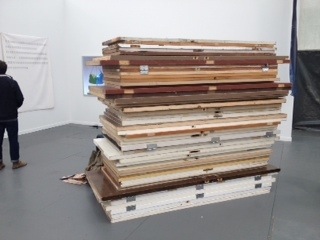
I thought a lot about how the art was selected. About how all of these galleries from all of over the world decided to spend thousands and millions of dollars to rent space and ship art and people across the planet to arrive and present the work in a period of three days. The commitment to capital communicates a commitment to the work, to the artists they selected to show. I should, and do appreciate this commitment. I wonder about the vision. I question the motivation of the work. I sometimes feel like I am an outsider in the audience witnessing an enactment of the “King with no Clothes.” This is not to say I thought the work was not good, but that perhaps the value of it requires extra explanation to appreciate, additional context to value, or a framework of a particular criticality that I do not have. Maybe I will grow into this criticality. But I doubt it. I have never appreciated conceptual art. I will never love the work of art that is, for instance, a sheet of plywood with a few onions sitting on it, presented as a modern still life. Ode to Cezanne? Perhaps. But I would prefer to experience Cezanne’s paintings first-hand, or simply eat the onions in a very good meal.

I walked through the exhibit, bay after bay, looking at the work, thinking to myself, this work represents how each artist has taken a stand in the world. This work is how they put their stake in the “metaphorical” ground of thinking, living, and potential cultural transformation. With all their will they lay claim to the making of art and expression of self, world, context….in order to communicate to another through this work. This is the best medium they could come up with, the manner of making, the required complexity or simplicity of their idea and it’s expression. This work on the wall, or the floor, hanging in the air, or living in a black box, is their commitment to the world, their involvement, their soul exposed, crafted in its necessity. For them, there is no other way, than what is in that booth. And as Gerhardt Richter has said, when they stood back to look at their work, they knew if was finished because it was “good.”

I walked through the Frieze show with these thoughts in my head. I looked at the work, I watched the people. Decidedly belonging to the community of the Art World. I look at the work with these thoughts, in this state of mind, because this is how I look at my work, this is how I move through the world. How can art be any other way?And then I consider that maybe they think about the making of art in another way, a way that is different from how I think about the making and necessity of art. That their making is not about the necessity of expression, the necessity of making a way to belong and transform, a criticality to the means of expression, the value of being in the world. Maybe they don’t even care about arriving at the “good.” I think I have a lot to learn about the Art World that exists inside the places such as the Frieze show. I need to decide if I want to learn this new World.

20130613-171132.jpg