Today is a slow day. A quiet day. A reflective day. A bit of a sore throat and the sky is threatening some sort of snow. Most days like this also end up being a cleaning day. Cleaning and reflecting . As I was moving some things from here to there in my house I realized I was moving two artifacts that had been given to me by past students. I scanned around and quickly realize that many of the artifacts in my house were given to me by past students. All came at some point along the way after they took a class or classes from me. Many are things they made, from pottery to jewelry. Or a family member made. Some were brought back to me from foreign lands. Some were collected from the Earth. Many I long ago consumed if the came in the form of chocolate or wine. Some came in the form of music , which keeps me young at heart and hearing. Sometimes the gifts have been adventures in themselves like a Wyoming Cattle drive on a remote ranch.
The artifacts blend together with those wild things I collect: feathers, bones, horn and antler, seed and pine cone. They come together to help make the texture and memories of the life I live. And on this quiet , slow day, I take a moment to honor the blessings and gifts I have received in having such great people in my life….and share with you just a few from my first teaching job in North Dakota to just this past year. Each are part of the miles traveled between here there.
>
In 2014 I am thinking about my past decisions, what has driven my professional choices, and I am thinking about where I am right now in my career, the choices I have made, what I have committed to. I am thinking about these things because I am looking toward the future and want to make sure I am still headed in a direction that I remain committed to. Over the year I would like to cover some of the intellectual ground that has influenced me. And if I am lucky some of my insights may inspire and encourage yours.
I started Artemis Institute because I want change the World. I didn’t start Artemis Institute simply to educate better designers, but to educate designers who think differently about the world, differently about themselves in the world. To lead more passionate and committed lives. To be empowered, to believe that they can change the world from their core beliefs to their actions. To gain mental and physical abilities to fuel the change. To provide an entry point into the world that inspires people who commit to a way of living that is beyond the self reference that is so dominate in today’s modern society. To create a world that grows from a sense of passion, love, and responsibility for others.
As I reflect, I don’t believe I was or am well equipped to drive the mission of Artemis Institute. What I mean by this, is that to start Artemis Institute was essentially to start a business, a big idea business, not a little idea business that follows a trend, or fits in an existing niche. Artemis Institute is not a spinoff of an existing company, not a special department or program in a University. Instead we are out in the world making our own waves and charting our own trajectory with no obvious path. More difficult is that Artemis Institute , as a big idea business, lies in the realm of educational altruism. Which, in our capitalist world means, non-profit. I wasn’t and never have been highly motivated by money, or making a profit. Instead I am interested in educating for the future, educating to change the world. But I have learned what having or not having money to spend means when searching for a way to create change in the world. If your goal is to change the world people need to know you exist. Needs to know your mission. Needs to know you mean “business.” In our multi-media culture, a culture that has all options at their finger tips, while at the same time being overwhelmed with the barrage of “campaigns” that exist from which shoes you should buy to which friend’s picture you should “like” finding a way for Artemis Institute to carry its message across state lines, national boundaries, the World Wide Web, different Eco-regions, oceans, and places has been a challenge. Primarily a challenge because with little funding to “campaign” not only is it difficult to help people learn about us, it is difficult to have people recognize the need to participate in the educational vision.
When I look back over the past six years I can hardly believe we are still standing. Not because the mission isn’t solid, but because my interest in education for the future runs against the overwhelming campaign of the “self.” Because in the end, Artemis Institute is me. It is an idea that grows from my beliefs, my sense of how the world should be, how we need to change to make the world a better place for all. However, we are still standing because there have been a few people who believe in me, believe in my ideas, and the founding of Artemis Institute, who have made sure that we have survived while I have been primarily focused on teaching Remote Studio, not campaigning for the non-profit These people have not been shy with their support, support I honor best by getting up every morning and continuing to believe in the need for change, and the ability to support a new vision of living and the world in the people who spend time exploring reality through the ideas of Artemis Institute.
And I imagine that these ideas may often seem cloudy to those I teach. They seem cloudy because I am more introspective than extroverted. And I believe that the best learning we do comes from teaching ourselves in an environment that supports our desire to learn. I think the outward visibility of the conventional education model simply misses the development of the individual. We may learn facts, and data, and context and history. But we learn very little about who we are, how we relate to the world and what effect we can have on others and the world. Our education system spends very little time preparing dreamers. We teach people how to look backwards. We prepare people for the “work force” we train people to be productive in the current framework of society. But dreaming is not encouraged, even when you are studying in a creative field today dreaming is being replaced with the idea of problem solving. There is a difference. Problem solving addresses the apparent issues, dreaming looks into the future to the world that is on the way. We need both: problem solving and dreaming.
But what is less valuable is educating people to simplistically fit the work force, the immediate needs. Because this educational attitude cuts short people’s ability to remain viable contributors in the future, instead only considering them as commodities. As a commodity we disregard our potential for participating in the making of the future. Without developing the ability to think like a visionary, to believe in vision and to believe in the ability to effect change we end up with a society that is defacto lazy, uninspired and without passion. Passion, I believe, is not a self-reflective condition, but passion is engaged when we look beyond ourselves and begin to recognize connections or potential connection between ourselves and the World. Instead of passion however, we have been educating toward selfishness, the non-motivated, and self-referential act of being lazy. Trading our potential for commodity.
The new world has the potential to be full of passion and vibrancy. And in order for the planet to remain viable we require these attributes. For without them we remain self-focused, self- preferential, lazy and selfish. We make poor choices for the whole. we make choices that exclude the rest, the world beyond the self. With the outward attributes of passion and vibrancy we commit to a world beyond ourselves, we dream of a world that can be more than its current present, and we believe in our ability to enact these changes. We recognize a world that is whole, interconnected and reliant on the health and value of all parts.
This is Artemis Institute. This is the belief system that supports the mission that there is a relationship between nature and culture, the world as its exists and the world that we make from our practices. A healthy, passionate and inspired culture does not evolve only in reference to itself, but evolves as we interact and live in the vibrant world around us.
I started with remote studio, which is an immersive design education program not only because these are my roots, but also because decisions about design are decisions about how we interact, impact and relate to the world around us. How we understand these decisions and how we understand ourselves in relation to the world and these decisions play a huge part in how the rest of the human population experiences themselves in the world. Where and how we live becomes how we are a part of or apart from the rest of the world.
Now it is your turn to think about how you live, the choices you make, where you invest your passion or if you are passionless. This is the time to think about how you are in the world and how you want to be in the future.
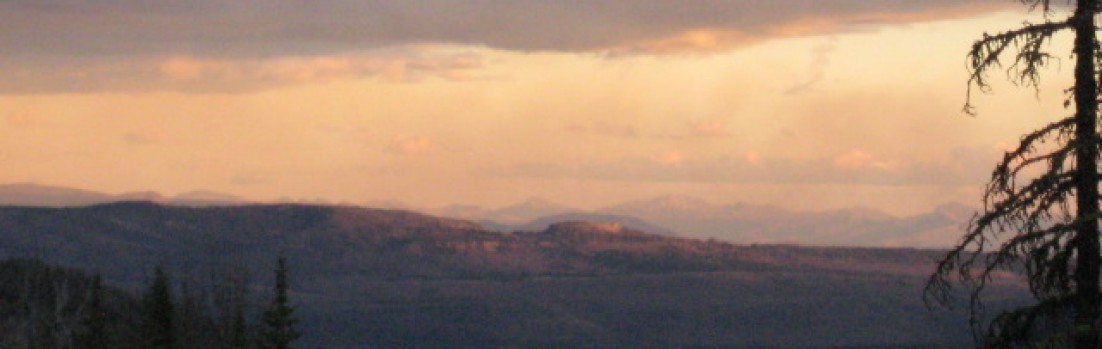
It’s winter here in Montana. Drama in the sky. Snow falls and everyone moves into action, building a fire or digging out their skis.
For me, I have a break from teaching Remote Studio. I’m settling into Bozeman. Really , a new hometown for me after leaving Livingston and moving between Jackson Hole and Louisiana last year.
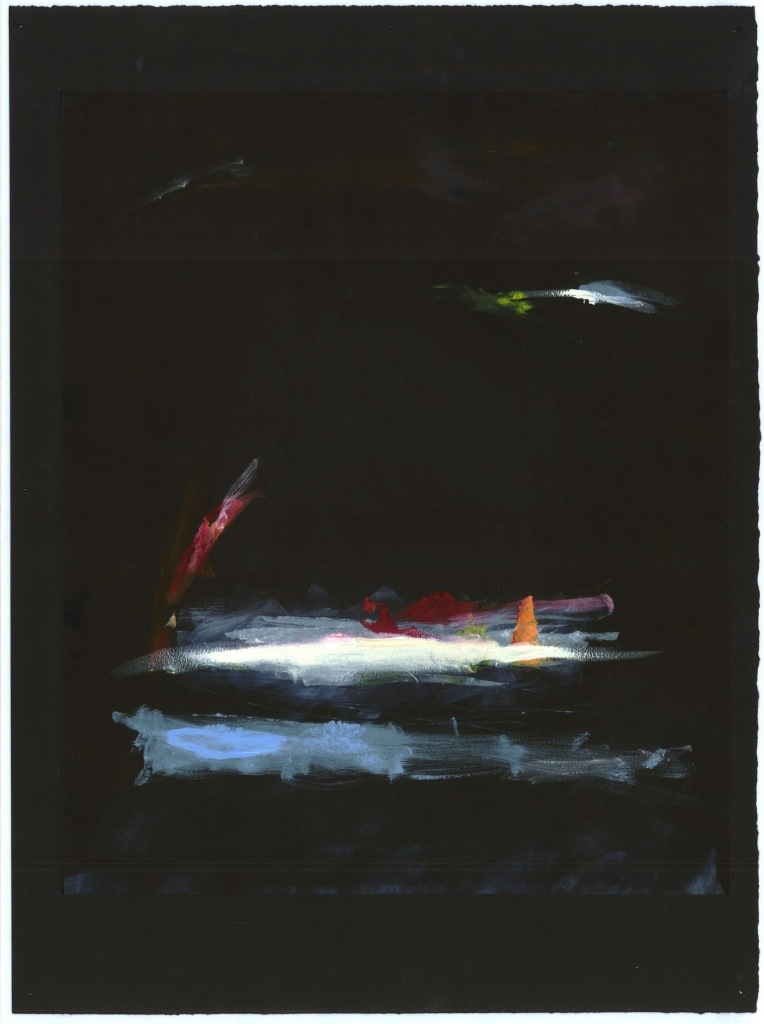
For 2013, after a 2 month disconnection by blog.com, I am back to posting. If you follow me, you will also notice the categories of the blog have expanded to include my paintings and other work.
Summer is here in Gallatin Valley and we race to meet it before it passes.
I had a hike up the Gallatin Mountain trail this evening. The valley below tells its story of the day. The fields of mature seed-heads, be it weeds or wheat are dry and brittle. The waterways move down-land in curls of green trees, flowering plants and berries. Heat rises into the smoky haze of the sky. I stood and looked over the valley, its beauty, and thought of our briefness. The moment passes into memory, then a poem, moving on to remembrance of another women’s life.
The poem, “To An Athlete Dying Young,” belongs to A. E. Housman…. it is the poem’s end that lives in my memory:
And round that early-laurelled head Will flock to gaze the strengthless dead, And find unwithered onits curls
The garland briefer than a girl’s.
I look across the valley floor before me, the valley of Africa – only ever an experienced in film – is recovered from a memory gained years ago. I am now thinking about Isak Dinesen and the path her love took when living in Africa. The years of love for one man known. The path of friend recognized through as many experiences as could be taken or allowed, life-long lover, loss and longing, patience, and ultimately the arrival of perfect timing. Dinesen must have thought the universe played some cruel joke when her lover was killed on his way to her as she waited one windblown day. Looking to the valley floor below I see the plain of Africa. Windswept and dusty. Dry and fearless.
Timing is the universe’s folly. From its space we live together or apart. In response to our inability to control time we often choose limitations instead of taking the opportunities that are living with us. Dennison was a brave person to choose love with imperfect timing. She chose a dynamic life, ever changing, never definite, discoverable but not pre-known.
Love and landscape. Memory and timing. Living and bravery. Life speeds by and with the closing of the night our head hits pillow. Timing. The moment passes to years before the morning comes.
Montana, my home for the past thirteen years, is easy to fall in love with. Its dramatic mountains, wild rivers and clear streams make for perfect wilderness adventures, and great settings for the romantic novels of the West.
Montana’s rich wild lands and wildlife are fully and aggressively supported by organizations such as the Sierra Club, National Audubon Society, Sonoran Institute and the Nature Conservancy, who’ve made it their mission to protect and conserve the region’s beauty and qualities. The northern Rocky Mountains are held in such high regard that most of these organizations also have key offices in Montana to assist with on-the-ground efforts and provide field reports to their main offices. Their successes are measurable through the general public’s knowledge about and support of these places. Both the staff and members of these conservancy organizations join together to work toward significant conservation efforts like the preservation of grizzly bear and the reintroduction of the wolf, as well as more basic tasks such as building trails and teaching environmental courses.
Last Year I fell in love with Louisiana’s wetlands, a place I had never been before. I was not prepared to be so captivated by this landscape or its people. From a distance the wetlands seem easy to know through a quick experience – simple, even simplistic. Yet, what I experienced was something quite different, a place that is wild, vibrant and intense, complex and rich. If the Rockies are all about straight-forward drama, wetland drama is reserved and subtle, requiring the investment of time and self-reflection. Louisiana’s wetlands are a viscous concoction of water, earth and air, elements constantly shifting in their percentages and relationships to one another. Sometimes more water, sometimes more earth, always the humid air holding an in-between quality.
Spending time with the people who call Louisiana’s wetlands home provides a window into a contemporary culture that remains invested in the place for sustenance, livelihood, art and daily passions. Despite the inherent richness of the Louisiana wetlands, and the despite the experiences of wildness and beauty they provide those who come to know them, the uneasy truth is that the wetlands are vanishing. In part this is due to our abuse and over-use of them; in part it’s because, unlike Montana’s landscapes, they do not receive national public attention, much less a similar level of political and activist support.
The loss of Louisiana’s wetlands means we lose one of the most vital and necessary ecosystems in North America. When we disregard this place, we not only fail to recognize that the survival of other creatures depends upon the wetlands’ continuation, but also that they and the wetlands are integral to our own lives and well being. There are many reasons for this, including such basics as the wetlands’ role in reducing erosion and retention of clean water. But according to Dr. Paul Kemp, the reality today is that approximately “one football field of wetland is disappearing every thirty minutes.”
Imagine, for a moment, watching your homeland disappear……..the place you live and love.
What are we to do when faced with such potential devastation and loss? As I see it, there are only two choices: complacency or engagement. Engagement is not an armchair activity – to change the direction of a current condition requires us to be vigilant, intentional and active. As we prepare to enter a new year, I challenge you to choose engagement. Learn the value of the wetlands; learn about the place you live. Understand what’s at stake for all of us, take initiative, take action – as an individual or a group member. Volunteer to leave the Earth a better place than you found it. As Annie Dillard has written, and I try to live by everyday, “grasp your one necessity and not let go.”
My love of place is now divided between Mountain and Delta. I am fortunate, however, to have the ability to spend time in both. In Montana as director of Artemis Institute, and in Louisiana as the 2011-12 Marie M. Bickham Chair in the School of Landscape Architecture at Louisiana State University.








 between here and there